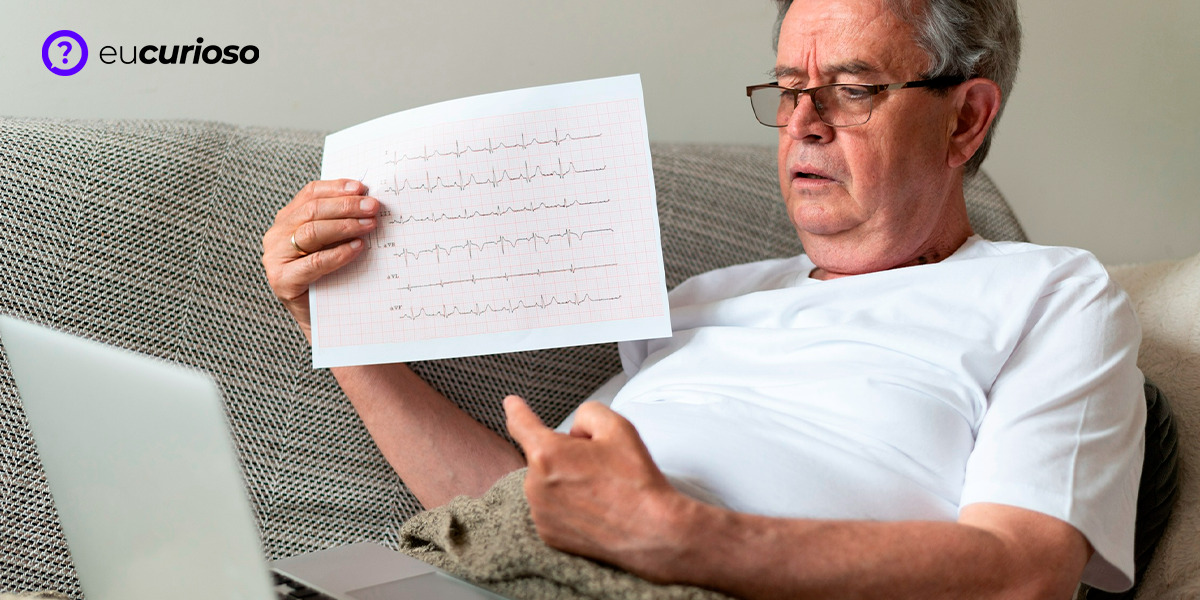
Understanding how disability retirement works is essential to guarantee your rights, if you are unable to work. It is like a security measure that the National Institute of Social Security (INSS) offers to those who can no longer carry out their professional activities permanently.
This benefit is intended for insured individuals who, after a medical evaluation, are considered incapable of performing any work and are unable to be rehabilitated in another role.
Dealing with a permanent disability is challenging, and understanding how disability retirement can help is a first step in adapting to this new reality!
What is disability retirement?
As you have noticed, disability retirement is a benefit provided by the INSS for you who, unfortunately, find yourself incapacitated to continue in your work. If you are in this situation, know that this is, yes, your right.
By definition, when we talk about this type of retirement, we are referring to a benefit for permanent incapacity – that is, if for some health reason you can no longer carry out your usual activities, you will receive continuous financial support.
For this right to be recognized, the INSS will carry out a detailed assessment of your situation, a process that includes a medical examination to confirm the severity and permanence of your condition.
If the incapacity is proven, you will have the security of a benefit that aims to ensure your financial well-being, compensating for the lack of a source of income for the work that you performed before the incapacity.
Who is entitled to disability retirement?
One of the conditions means having the quality of an insured person with the INSS, that is, being up to date with social security contributions or within the grace period. This means that the benefit is for those who contribute regularly or still maintain their rights after stopping contributing for a certain period of time.
As previously mentioned, you must undergo a medical examination to confirm your permanent incapacity to work. However, if you are temporarily incapacitated, you will be entitled to sickness benefit, and only after a certain period of time, if your condition does not improve, will you be eligible for disability retirement.
During the assessment, they will assess the severity of your condition and whether it permanently prevents you from carrying out your work activities. If your incapacity is proven and the other requirements are met, such as the waiting period and the status of insured person, you will be able to apply for the benefit.
Another important point is the 12-month contribution requirement, except in cases of serious illnesses specified by the INSS or in cases of accidents of any nature. Be aware that, even if you are retired due to disability, you may be called for new assessments from time to time, as the INSS may want to reevaluate your condition.
List of diseases that exempt the insured from the waiting period
To be granted disability retirement, it is generally necessary to comply with the 12-month contribution period. But did you know that there are some illnesses that exempt this requirement?
Among the main pathologies that exempt the insured from the waiting period to apply for disability retirement, we can mention:
- Active tuberculosis;
- Hansen's disease;
- Mental alienation;
- Malignant neoplasm (cancer);
- Total blindness;
- Irreversible and disabling paralysis;
- Severe heart disease;
- Parkinson's disease;
- Multiple sclerosis;
- Severe liver disease;
- Severe nephropathy;
- Advanced stage of Paget's disease (osteitis deformans);
- Acquired immunodeficiency syndrome (AIDS);
- Radiation contamination, based on the conclusion of specialized medicine.
If you have any of these health conditions, it is important to have the medical report in hand and take it to the INSS medical examination to prove the incapacity.
Difference between disability retirement and sickness benefit
It is very common to have doubts about the differences between disability retirement and sickness benefit, as both are linked to health conditions that affect your ability to work.
O sickness benefit, also a social security benefit, is intended for those who are temporarily unable to perform their activities due to illness or accident. Disability retirement is intended for situations in which the inability to work is recognized as permanent, after undergoing a medical examination.
An important point is that sickness benefit is convertible into disability retirement – which occurs when, over time, permanent incapacity for any work activity is proven, with no prospects of rehabilitation.
How to apply for disability retirement?

First, you need to access the system MY INSS, which is an online platform, or call 135, which is the INSS telephone number – these channels allow you to schedule a medical examination.
In the MEU INSS system, after logging in with your username and password, look for the “Appointments/Requests” option and follow the steps indicated to schedule your medical examination. The INSS agency will verify the information provided and schedule the medical examination.
Remember that, on the day scheduled for the assessment, it is essential to bring all medical reports and exams that prove your inability to work. Here, attention to detail and organization are allies to ensure the process occurs in the best possible way.
What documents are required to apply for the benefit?
Applying for disability retirement from the INSS requires you to present some important documentation.
Among the necessary documents, it is mandatory to bring your identity card (RG) and CPF, in addition to your work card, to prove your employment history. As you already know, you will also need medical reports and exams that certify your health condition.
Don't forget to also attach documents proving your social security contributions, such as payment receipts or social security statements. This way, you will be prepared and everything will be taken into account to guarantee your right to disability retirement.
How is disability retirement calculated?
O calculation It is based on the simple arithmetic average of the highest contribution salaries, corresponding to 80% of the entire contribution period since July 1994. In other words, it is an average of the salaries you received and on which you contributed to the INSS.
This average is the basis for determining the value of the retirement pension. And there is more: there is a factor that can increase this value. If the disability is considered a major disability, which means the need for permanent assistance from another person, the benefit value can increase by 25%.
This calculation may seem complicated, but it is actually a process that is well defined by social security legislation. If you have any questions, it may be a good idea to talk to a social security law specialist.
Conclusion
We saw that this social security benefit is financial support essential if you are permanently unable to work. It is important to understand all the details of this process, from who is entitled to how the retirement value is calculated.
Living a life with an inability to work is not easy, but with disability retirement, you at least have the financial security to continue your life with dignity.
If you have any questions about the process, don't hesitate to seek out a professional specialized in social security law to help you. Take good care of your health and well-being, and know that this law is there to support you when you need it most!